

Communion
Communion is a moment to remember Jesus’ sacrifice and thank Him for what He’s done.
Watch this 5-minute video with Pastor Jeff to learn more, or scroll down for more details from our Communion brochure.
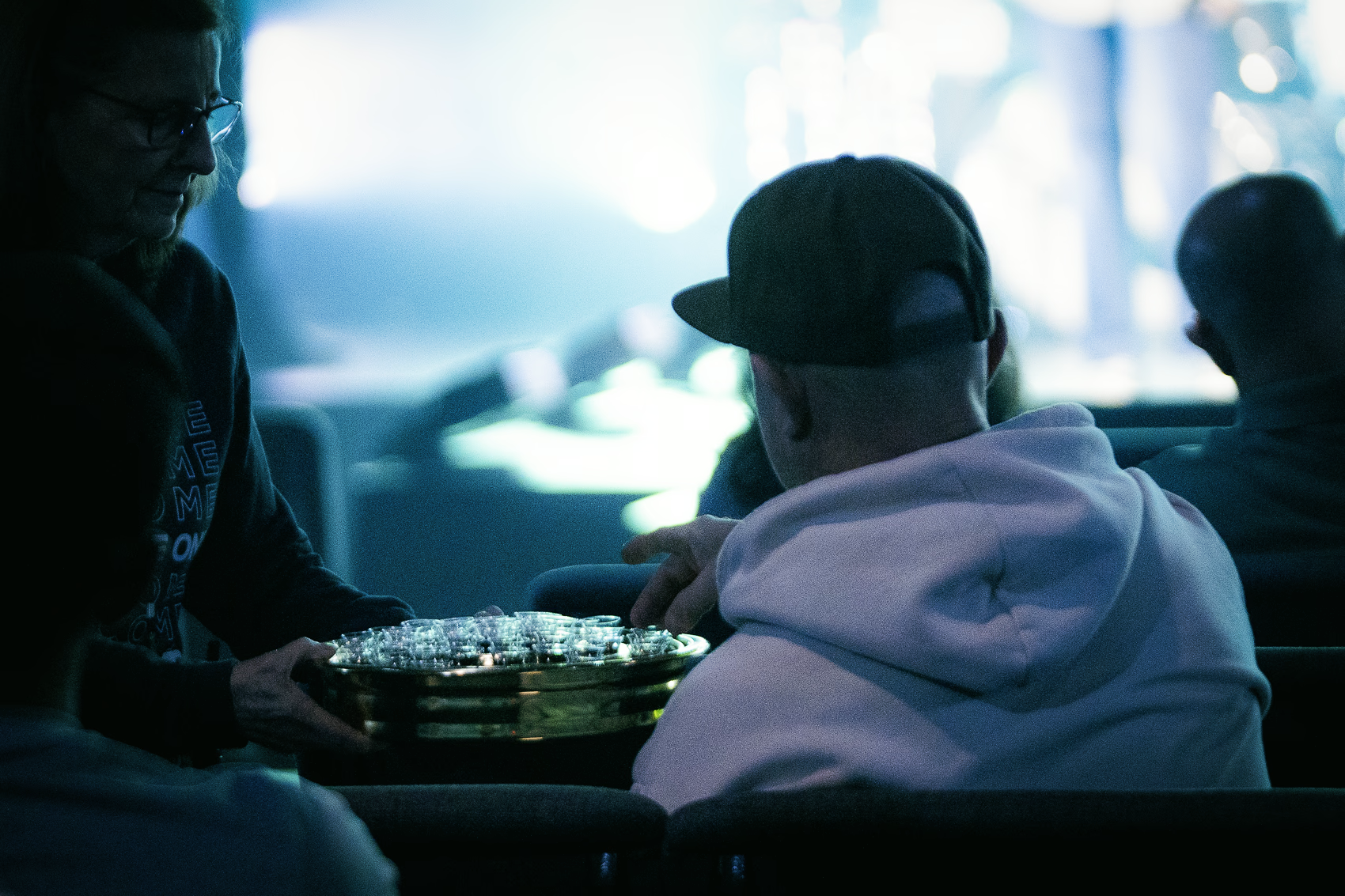
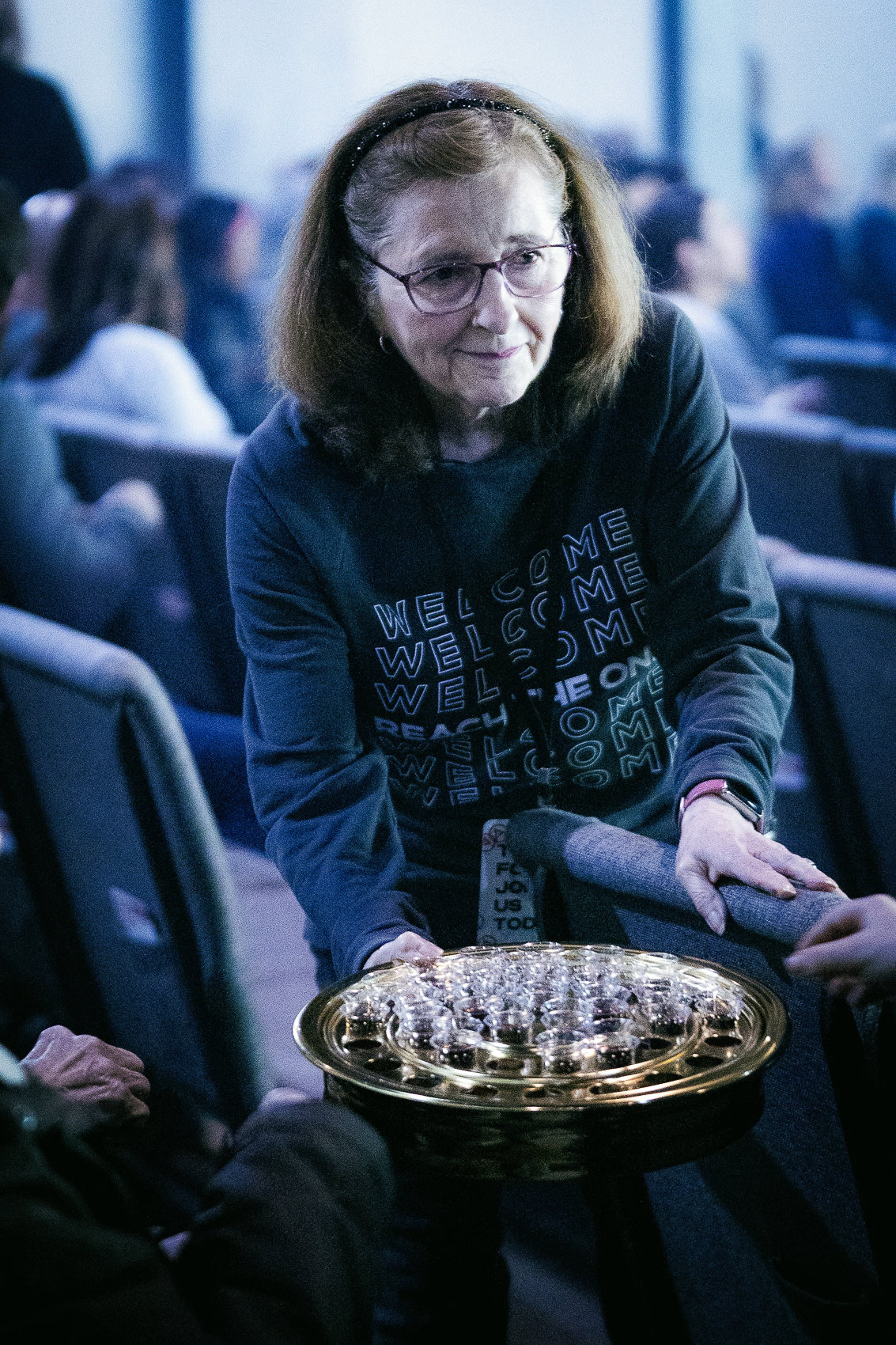
Communion uses bread and juice to symbolize Jesus’ body and blood. At Allison Park Church, we don’t believe the elements literally change into Christ’s physical body and blood. We believe they remind us of the real sacrifice Jesus made on the cross. As we celebrate Jesus in this way, we experience a unique connectedness to Him and to one another through the presence of the Holy Spirit. Unlike those who practice communion as a sacrament, we don't believe that taking part in communion is how we receive grace. Instead, it's a symbol that grace is only received through the person of Jesus Christ.
Jesus introduced communion during a Passover meal with his closest friends (Matthew 26). Passover is the Jewish celebration that goes back thousands of years as a commemoration of the moment when God delivered his people from slavery in Egypt. During this event, God rescued them from the plague of death and prophesied a fuller and greater redemption that would come through the Messiah in the future.
When Jesus shared His final passover meal with the disciples, He used the bread and the cup as a way to proclaim that He was the prophetic fulfillment of their Messiah and our redeemer. Today, when we celebrate communion we don’t walk through the entire passover celebration. We simply pull from that context the statements of Jesus given to us in the Last Supper.
When we take communion, we’re looking back to the moment Jesus gave His life for us. He declared this when he said, “This is my body which is broken for you, do this as you remember me.” Jesus also took the cup and said, “This is the new covenant in my blood, which is poured out for you.”
At the moment Jesus said these things, He was only a few hours from His suffering on the cross. Now, we look back on what he did for us when He suffered, bled, and died to take away our sin.
Communion represents a new covenant—a sacred and lasting promise between God and people. In the Bible, a covenant is more than a contract; it’s a binding, relational agreement established by God, often sealed with a symbolic act and marked by sacrifice. Biblical covenants—like those with Abraham, Moses, and David—were always initiated by God to bring people into deeper relationship with Himself.
When Jesus took the cup and said, “This is the new covenant in my blood” (Luke 22:20), He was declaring the beginning of a new relationship between God and humanity—one not based on law, but on grace; not maintained by rituals, but through faith in His finished work on the cross.
Through Jesus’ sacrificial death, this new covenant offers us forgiveness, transformation, and eternal life. So when we take communion, we’re not just participating in a religious tradition; we’re reaffirming that we belong to Jesus and He belongs to us. By extension, we belong to each other as a part of God’s new covenant family.
There are some significant warnings given to us when we approach this moment. Paul teaches this in 1 Corinthians 11: 27-28:
“So then, whoever eats the bread or drinks the cup of the Lord in an unworthy manner will be guilty of sinning against the body and blood of the Lord. Everyone ought to examine themselves before they eat the bread and drink from the cup.”
This sounds scary. But it doesn't have to be. The challenge is to look inside our hearts and make sure that we are fully surrendered to God in this moment, that we are willing to forgive those who have offended us, and that we are ready to repent of any sin patterns. It’s about being cleansed and forgiven.
It also requires us to look around to make sure we are not neglecting our brothers and sisters in Christ in their struggles or sufferings.
In the church at Corinth, there was a problem that became visible during communion. The new testament practice was to celebrate communion during small group home gatherings, as well as in large event family picnics (called Love Feasts). During these large events, the rich would eat in one section with extravagant tables filled with abundance. The poor would enjoy meager portions while sitting right next to their brothers and sisters in Christ.
The challenge is to remember that we are not only in covenant with Jesus, but we are in covenant with each other. This moment is designed to be highly relational. Not rushed. Not superficial. We remember that we belong to Jesus and to one another.
Yes, it’s sacred. Yes, it’s serious. But communion is also a celebration—a joyful reminder that Jesus is alive, and He’s coming again. We remember His death, but we also look forward with hope to His soon return. As we celebrate we also believe for the current manifest presence of Jesus to bring healing, freedom, salvation, reconciliation, and transformation into our lives today.